Laser-Activated Clear Air Turbulence Detector
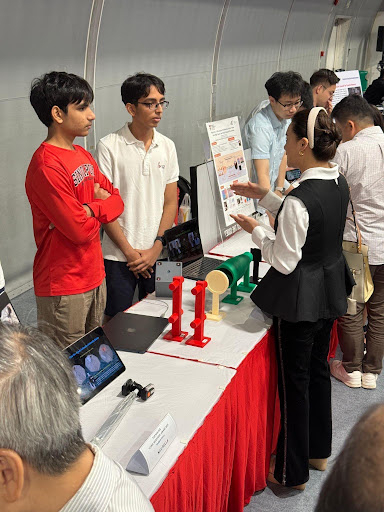
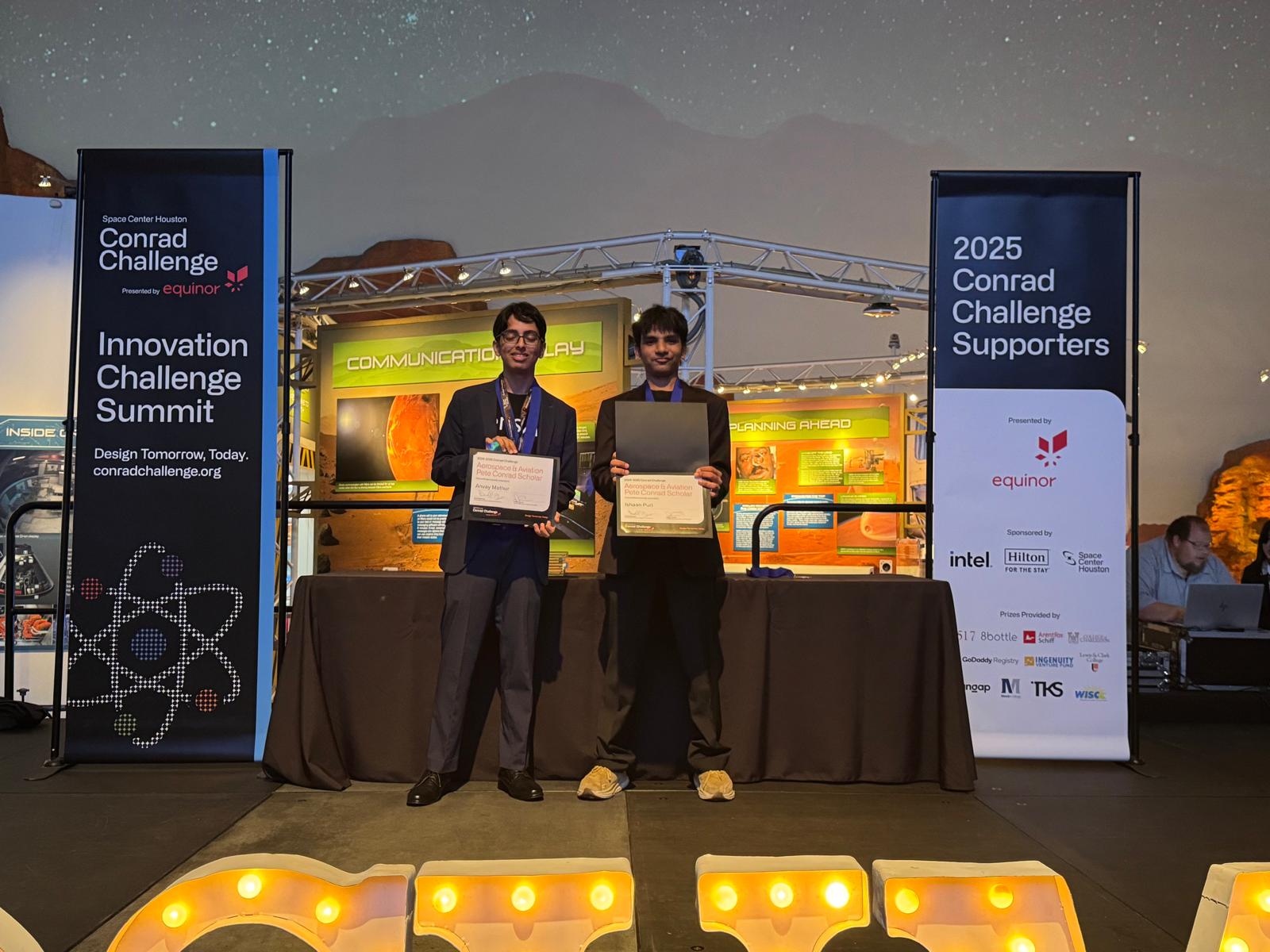
Recognition
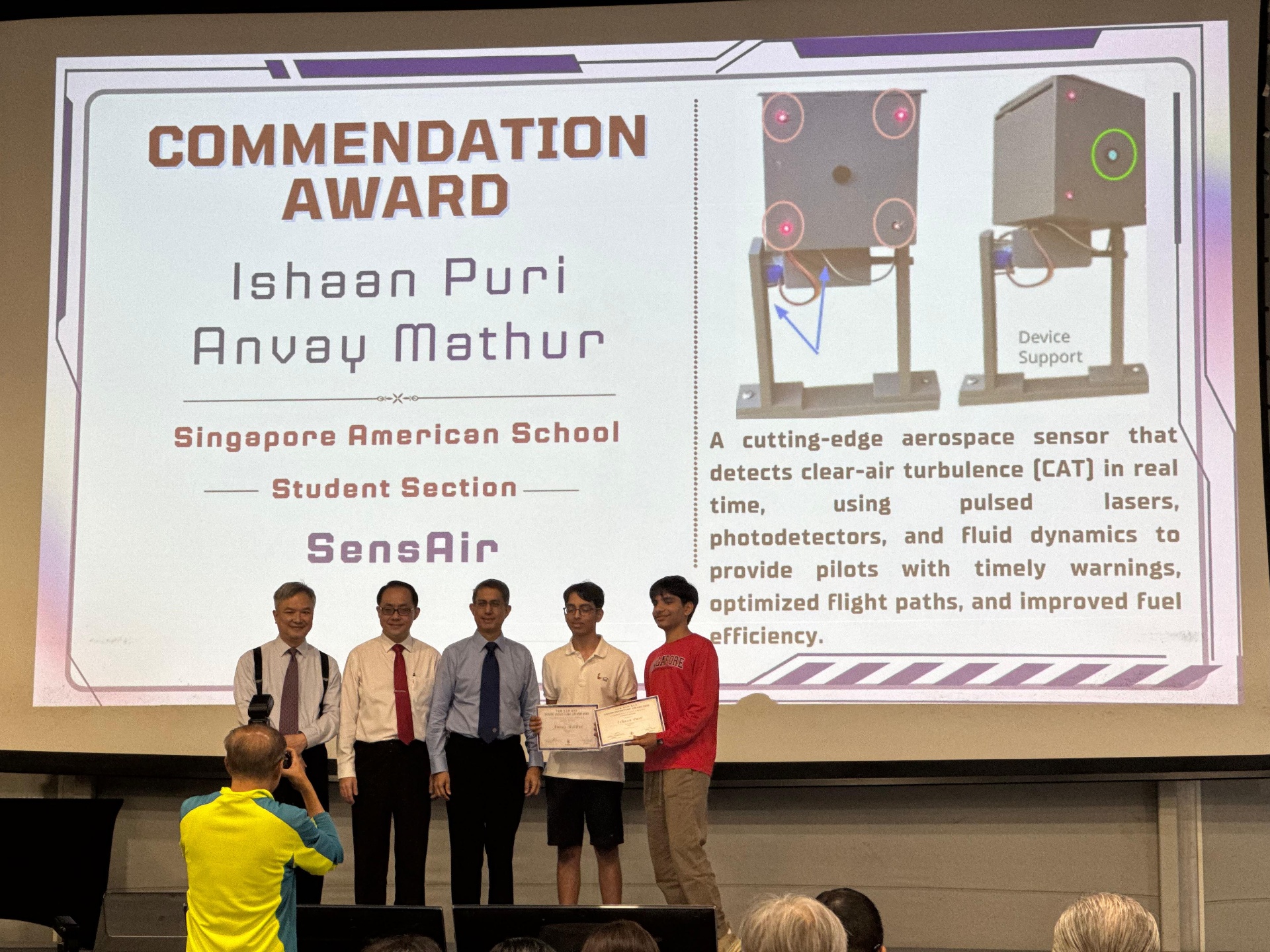
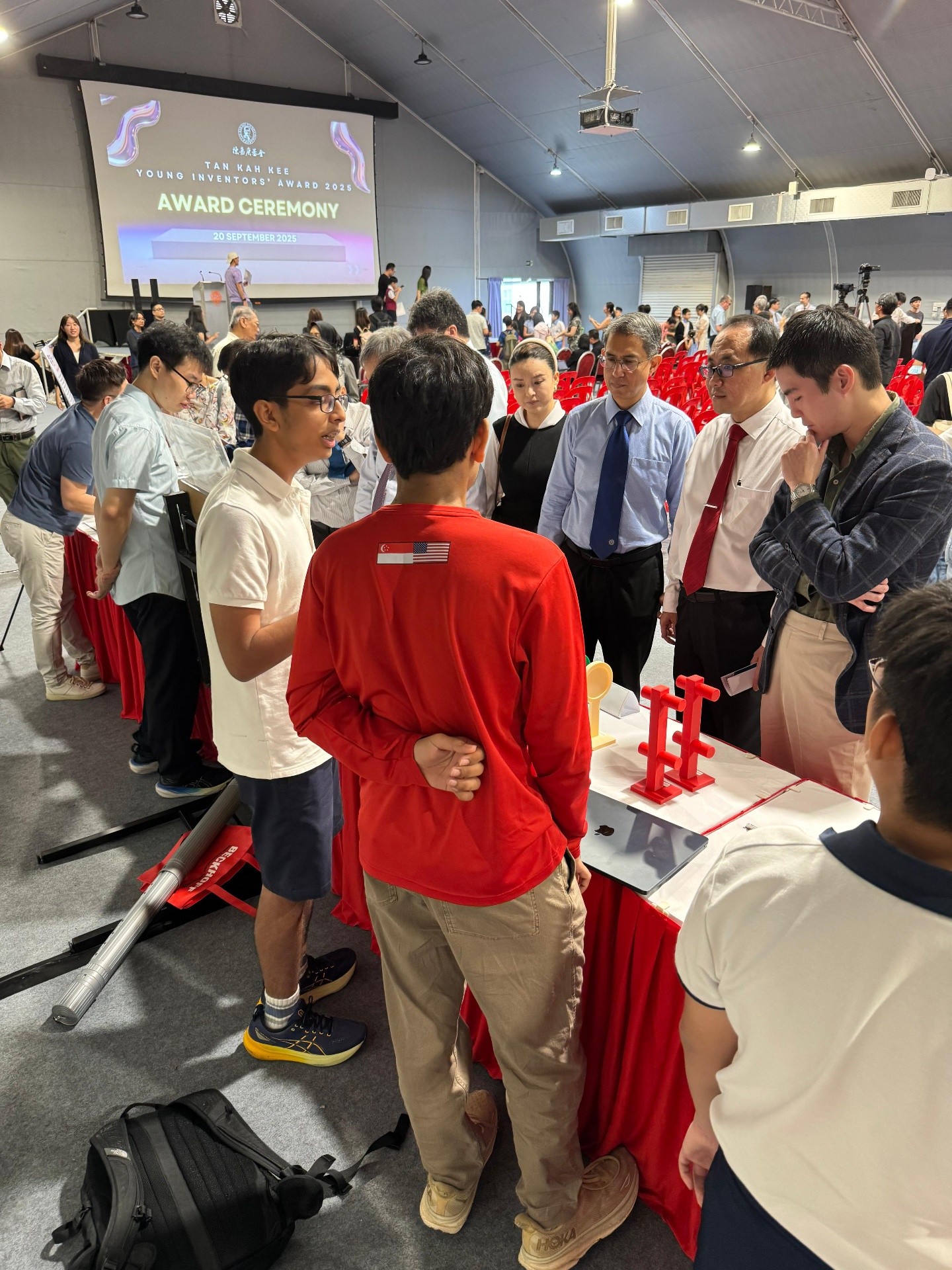
Recognised on the world stage for breakthrough aviation safety technology.
The Problem
CAT leaves no radar signature. Current warnings rely on briefings updated every six hours. SensAir changes that — with real-time detection up to 16 km ahead.
Technology
Nanosecond-accurate pulsed lasers and single-photon photomultipliers measure exact travel time of each photon reflecting off air molecules. Doppler shift analysis calculates particle velocity and position with 300 mm accuracy at 4–16 km range — far ahead of the aircraft.
Maxwell–Boltzmann distribution calculations process individual particle datapoints to build a real-time 3D map of airflow ahead of the aircraft — turning raw photon data into an actionable spatial picture of turbulent air for pilots.
A 3D convolutional neural network trained on turbulence datasets actively monitors the airflow readout and alerts pilots instantly. The hybrid RNN/CNN model also connects to a global satellite network, crowdsourcing turbulence data from every SensAir-equipped aircraft worldwide.
Hardware
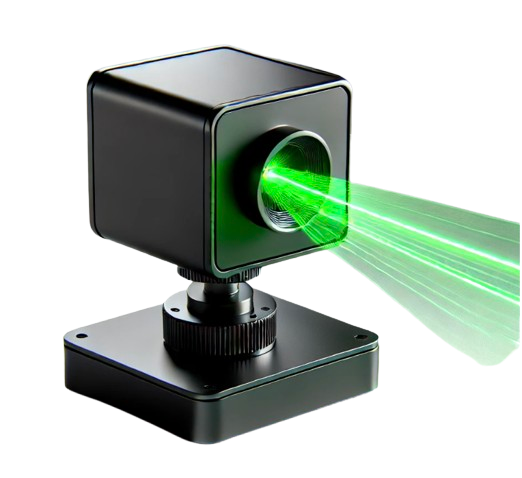
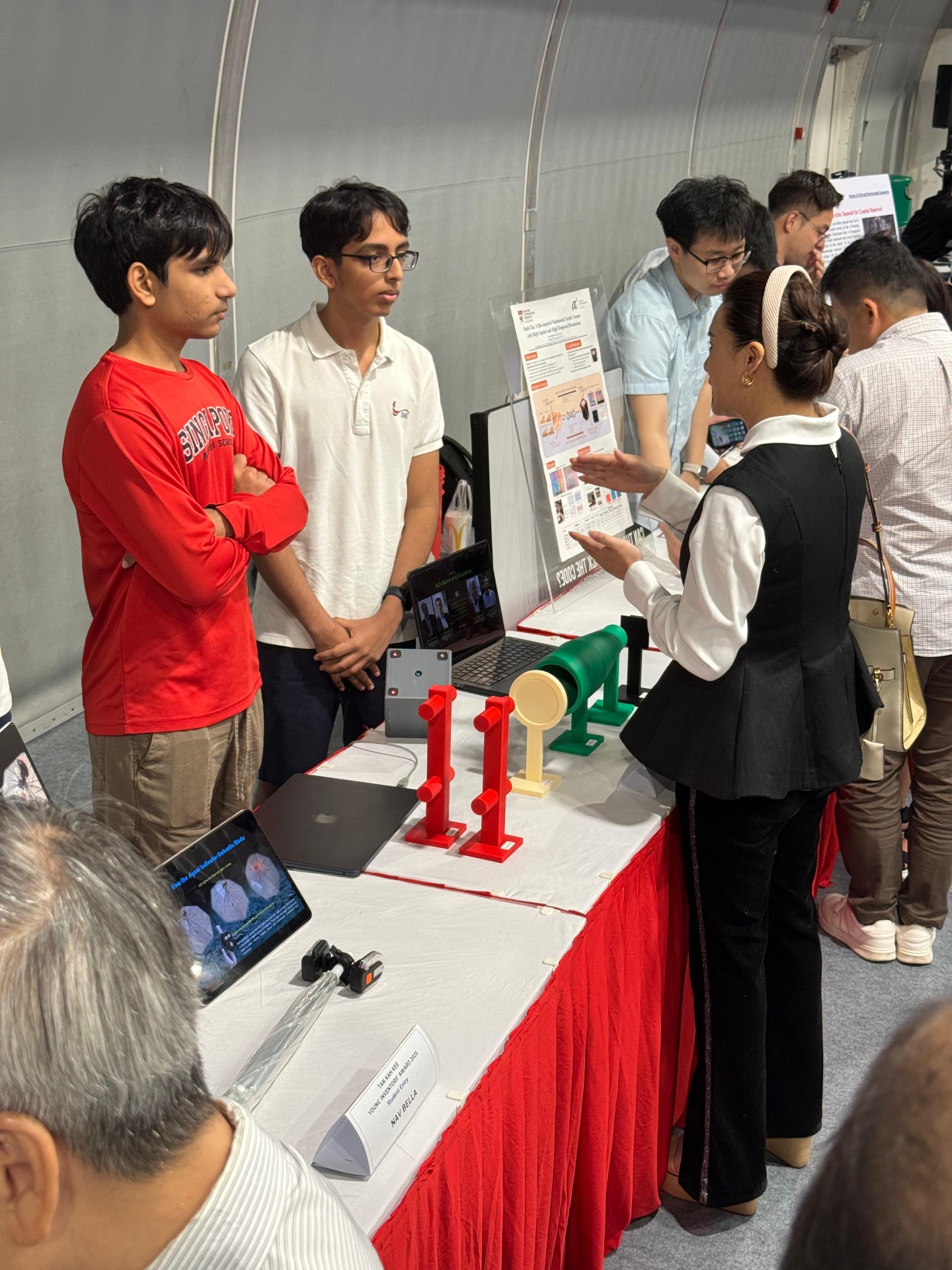
A compact, aircraft-installable device pairing a nanosecond-pulse laser emitter with a beam-expanding lens and single-photon PMT — spinning at high speed to scan the full airspace volume ahead.
Global Network
Every SensAir-equipped aircraft contributes to and benefits from a live global turbulence intelligence layer.
All SensAir API-enabled aircraft connect to the global turbulence map via satellite, receiving live data updates from every other equipped aircraft.
Each aircraft feeds sensor data back to the network, continuously improving the AI model with fresh real-world atmospheric observations.
Neural networks combined with traditional numerical weather prediction produce a comprehensive, continuously updated global turbulence forecast.
Press & Coverage
SensAir's breakthrough has been covered by major outlets and highlighted on global stages.


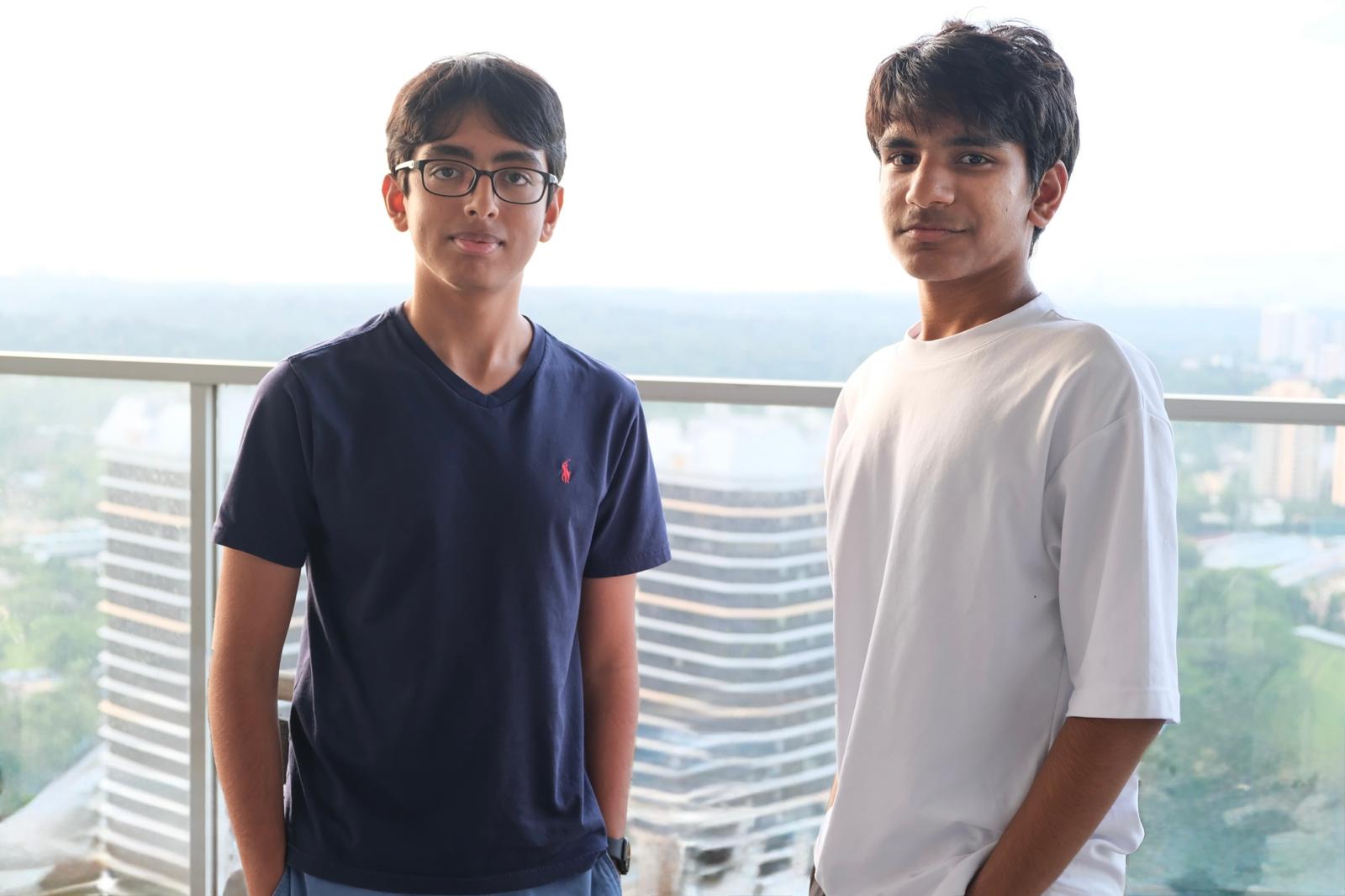
The Founders
Two Singapore students on a mission to make every flight safer.
Roadmap
SensAir's next phase targets enhanced detection, global deployment, and expanded turbulence classification.
More advanced convolutional and recurrent models to improve prediction accuracy and reduce false-positive alerts across complex atmospheric conditions.
Partnering with airlines and aircraft manufacturers to build the first real-time global turbulence intelligence layer available to all equipped aircraft.
Integrating satellite feeds, METAR data, and live sensor telemetry for up-to-the-minute turbulence awareness at all altitudes and geographies.
Extending hardware to classify high ice water content, adiabatic lapse rate anomalies, and wildlife hazards including bird-strike detection.